The inheritance of exile: what Adam and Eve teach us about leaving the garden
What does the creation story tell us about our relationship with the world around us?
When thinking about where to begin this series, it felt right to start with a story many of us already know.
A garden. A tree. A woman. A choice.
Adam and Eve have shaped more than sermons and stained glass windows. Their story lingers in how we talk about good and evil, temptation and blame, masculinity and femininity.
But I’m interested in something quieter.
What does the creation story tell us about our relationship with the garden itself?
About exile. About separation. About what happens when humans leave the land — or are cast out from it.
What if the story of Eden has quietly informed the way we imagine ourselves as separate from the living world?
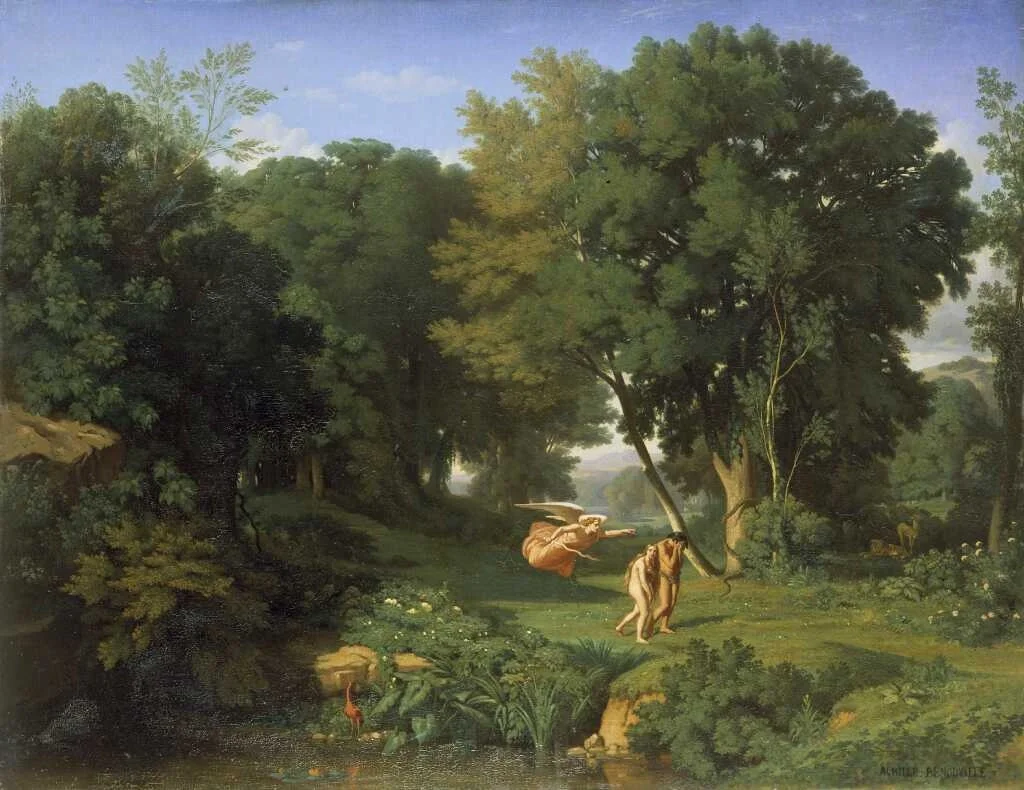
Adam and Eve Chased from the Terrestrial Paradise, **Jean-Achille Benouville,* 1841*
From light to water, stars to trees, fish to birds, God creates a harmonious garden.
Then Adam is formed, and given a task: to have dominion over “the fish of the sea… and over every living thing that moveth upon the earth.”
In giving them names -
livestock, birds of the heavens, beasts of the field -
Adam is encouraged to take responsibility for the living beings around him.
But a line is also drawn.
In the very act of observing, speaking, and categorising, he begins to stand slightly apart.
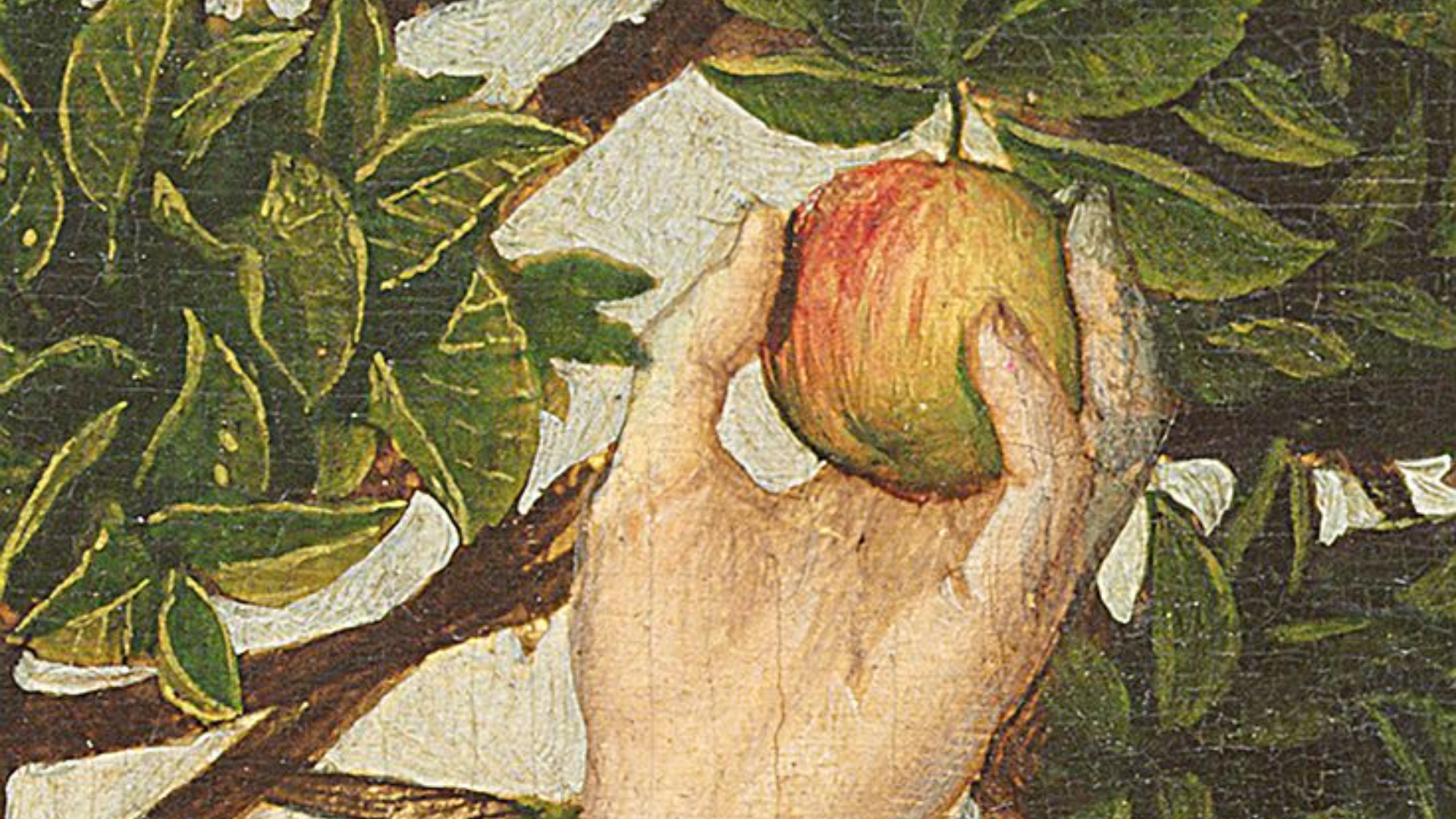
And then comes the fruit.
The knowledge of good and evil.
The moment after which nothing feels entirely innocent again.
Whether read literally or metaphorically, the story ends in exile — not just from a place, but from a state of belonging.
Adam and Eve leave the garden carrying something new: guilt, shame and a sense of separation.
The world that follows is marked not only by labour and consequence, but by distance — from land, from life, from the quiet assumption of being within rather than apart from.
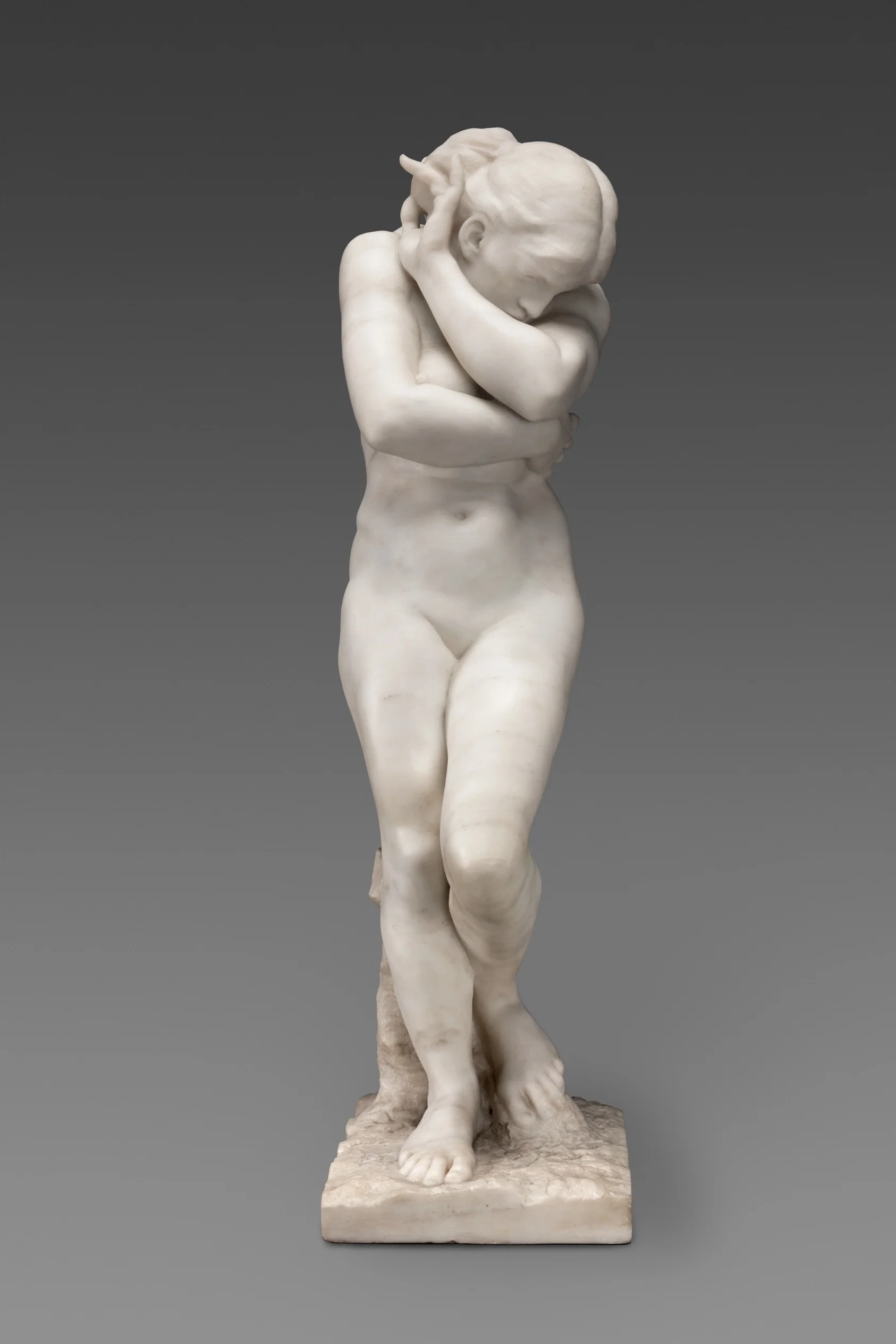
Eve after the Fall, modelled 1883, carved c.1886, Auguste Rodin (French, 1840-1917)
Perhaps what we inherited was not just a story about leaving a place, but a way of speaking as if we stand outside it.
Because today, when we talk about the Earth, we rarely sound like we belong to it.
We talk about
taming nature, conquering land, extracting resources
About mastering the elements — and then protecting ourselves from the consequences.
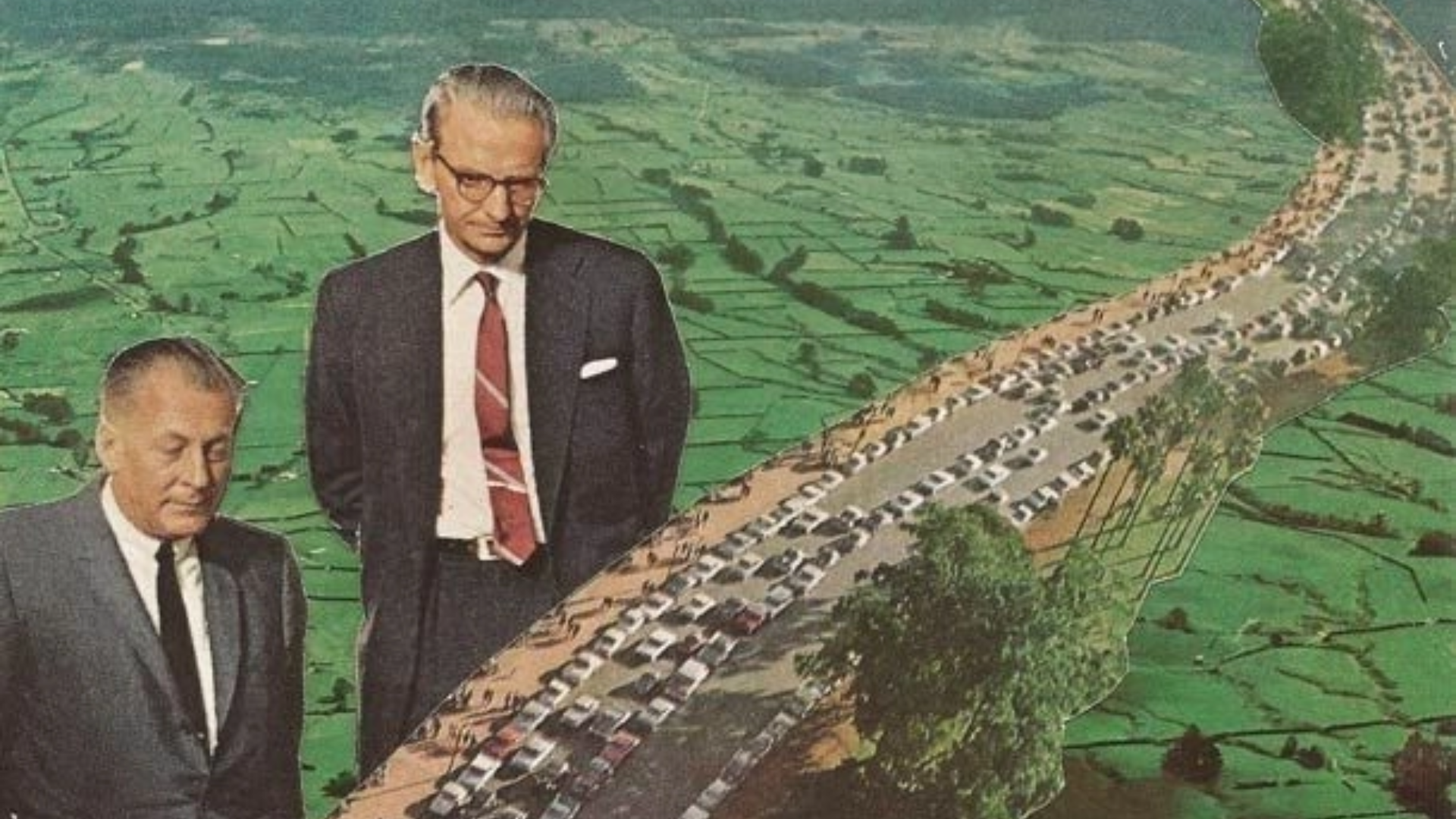
Our language is often technical. Rarely tender.
But what if we spoke as if we were still part of the garden?
Not in innocence, or without knowledge — but with the quiet assumption that we belong there.
What if the forest wasn’t timber, but an older relative?
Steadier than us. Slower than us. Someone we rely on, even when we forget.
What if the river wasn’t a resource, but a neighbour?
One who sours when neglected. Who nourishes when cared for. Who remembers what we pour into it.
The language we use begins to shift what feels possible.
It becomes harder to speak of extraction when you’re speaking of a neighbour.
Harder to justify depletion when you’re speaking of a relative.
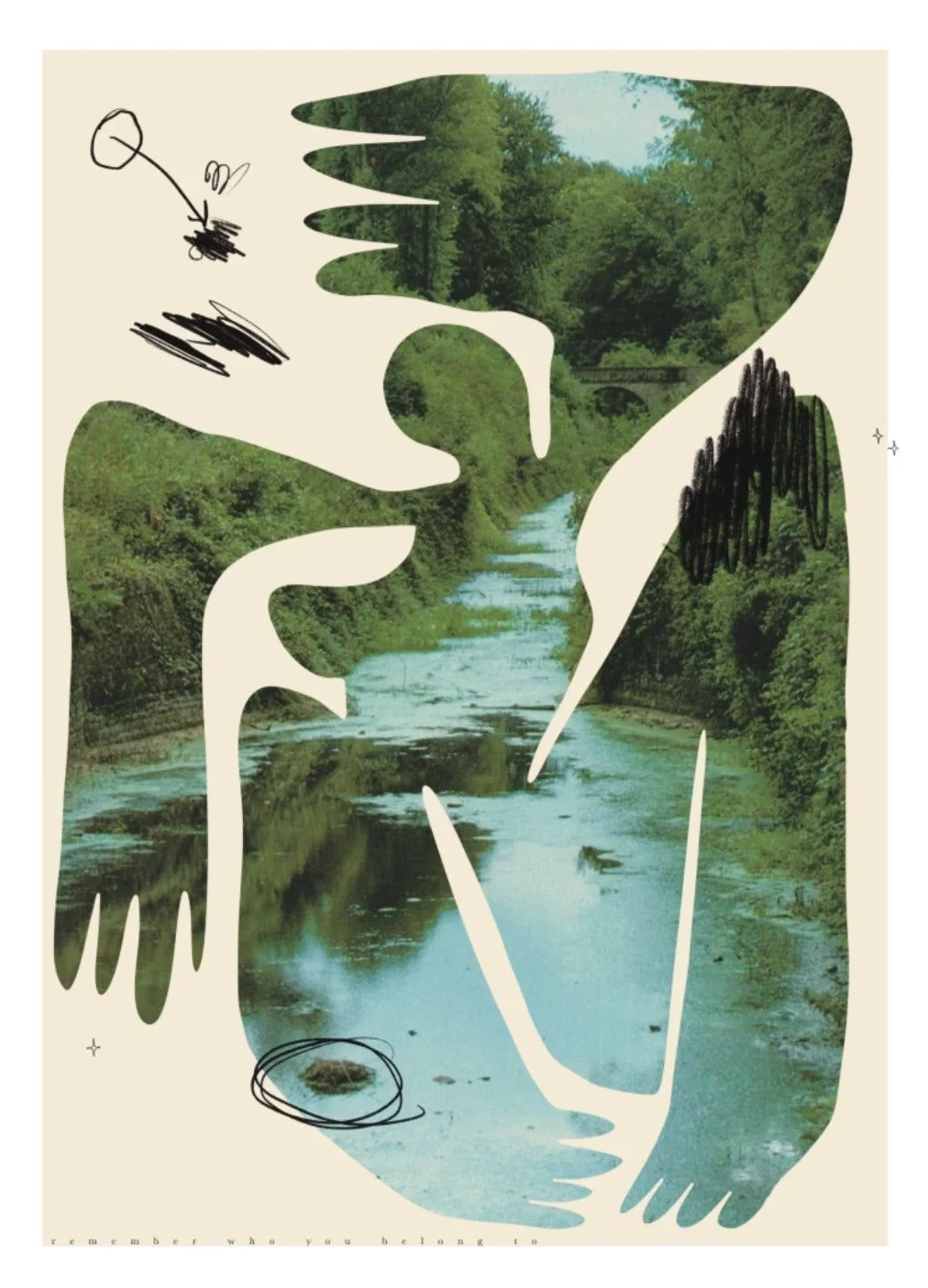
Mummy Earth, Beth Cockroft
Maybe the work isn’t to return to Eden.
Maybe it’s simply to remember how to speak as if we still belong to the garden.
This space is an experiment in that remembering.
Each cycle will begin with a dominant story — one we’ve inherited, often without noticing — and gently turn it over.
We’ll look at what it assumes, how it shapes us, and what it makes possible.
Then we’ll try experimenting with a new script.
And see what shifts.
